Overview
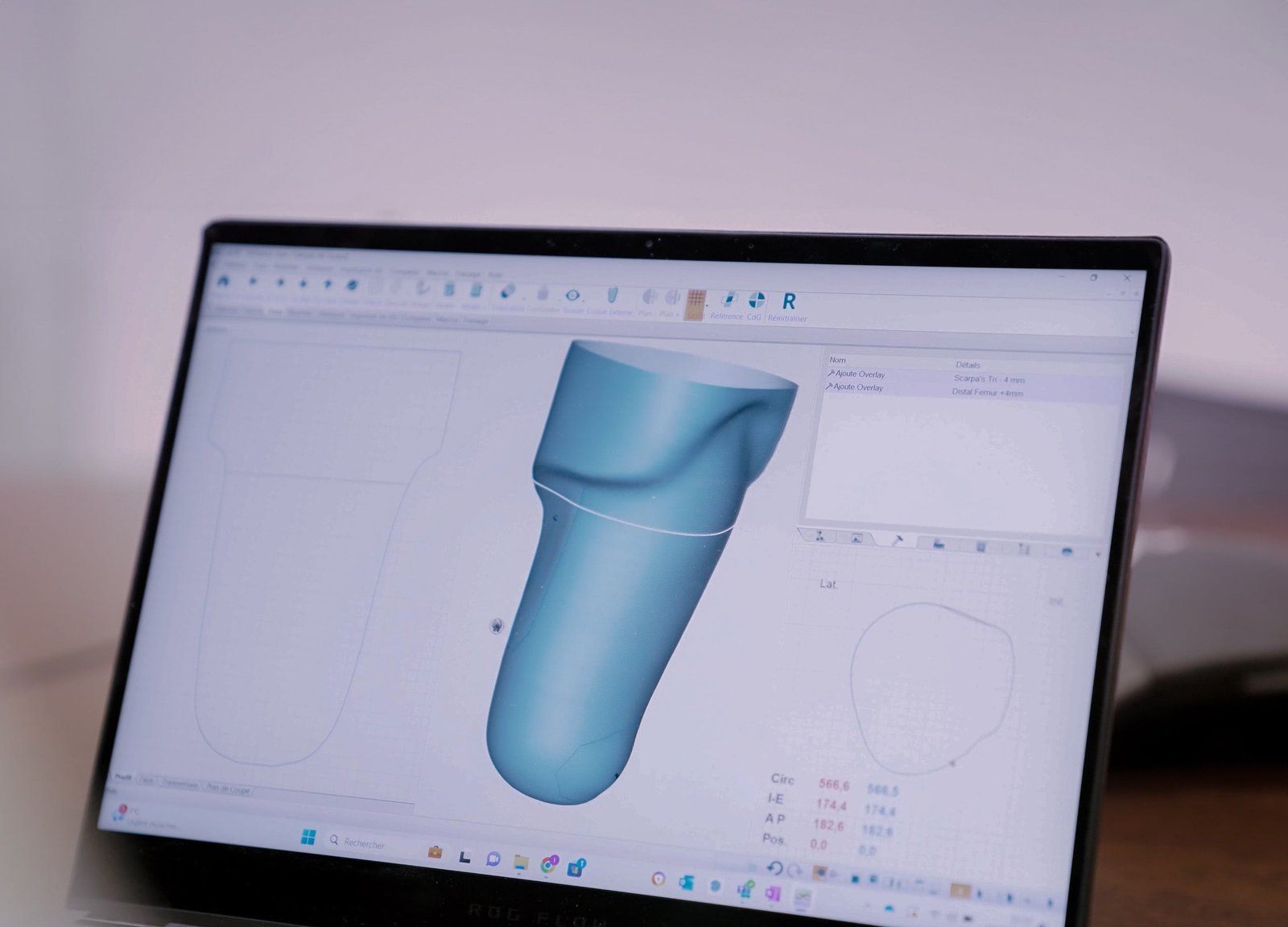
At Qwadra Vancouver, I work as a software developer on Canfit, Qwadra's computer-aided design (CAD) application for digital orthotics and prosthetics (O&P).
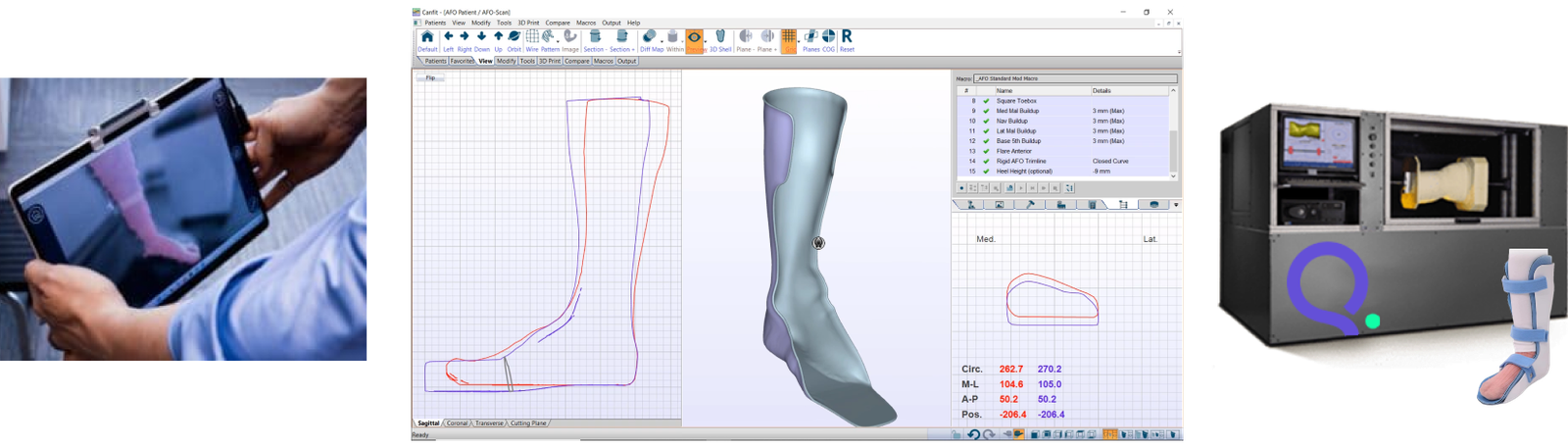
Practitioners use Canfit to shape and design custom O&P devices digitally in a precise and efficient way. Canfit accepts 3D patient scans, manual measurements, or both. Its strength lies in a range of intuitive tools, templates, and macros that support anatomically correct modifications. Completed designs are exported as shape files for 3D printing or CNC manufacturing of devices like prosthetic sockets, ankle braces, and custom shoe insoles.
Canfit pioneered CAD/CAM O&P technology and is the centerpiece of many clinics' digital O&P workflows. Compared with labor-intensive traditional O&P manufacturing, digital workflows are highly customizable, precise, and efficient.
My Contributions
Shape modifiers and 3D design
A core part of Canfit is O&P-specific modification: buildups, reductions, alignment, and other shape changes that would be difficult or impossible in plaster alone. I contribute to shape modifiers and related tooling so users can rotate, align, twist, and refine devices with controls that stay faithful to clinical intent.
Macros and workflow automation
With macros, users automate O&P workflows by recording a sequence of modifications and replaying it later, with the option to edit it on playback. I work on macros and the surrounding automation so clinicians get predictable, consistent behavior suited to clinical use.
Networking
I designed and implemented a PHP configuration API that delivers update alerts and other dynamic content to Canfit. These features help customers stay current and connect with sales and support when needed. I owned that work end-to-end.
Learnings
Canfit was my introduction to C++, and it was a much more mature, complex product than most apps I had worked on before. It was a strong lesson in C++ memory management for keeping performance solid when processing large, complex datasets. I also learned Windows UI development with MFC, deepened my 3D CAD knowledge, and adopted tools such as Subversion.
Before this role, I had worked at fast-paced startups; Qwadra is my first position at a large, established international medical-technology company. That meant learning processes for reliable, high-quality software: rigorous code review, regulatory constraints, and collaboration across many teams.